Escola de Gente - Comuniçao em Inclusao “
Summary
Description
It was created in response to the scarcity of
accessible books in Brazil, where, according to the latest 2022 Census conducted
by the Brazilian Institute of Geography and Statistics (IBGE), the illiteracy rate
among persons with disabilities aged 15 and over is four times higher than among
persons without disabilities. One of the main reasons for this disparity is the lack of
accessible publications, which limits access to information.
One of the project's objectives is to expand the production of accessible
publications in Brazil, fostering a reading culture and supporting the literacy
development of persons with disabilities. To achieve this, the initiative published
and distributed the 15th book on inclusion by Claudia Werneck - the only Brazilian
author recommended by UNESCO and UNICEF - and made available, free of
charge, the equivalent of 36,000 accessible copies (counting all accessible formats)
through 30 organizations serving beneficiaries in all regions of the country.
The project was conceived according to Design for All principles. Accessibility was
integrated from the outset, enabling persons with different disabilities, literacy levels
and reading preferences to access the same literary work through multiple formats.
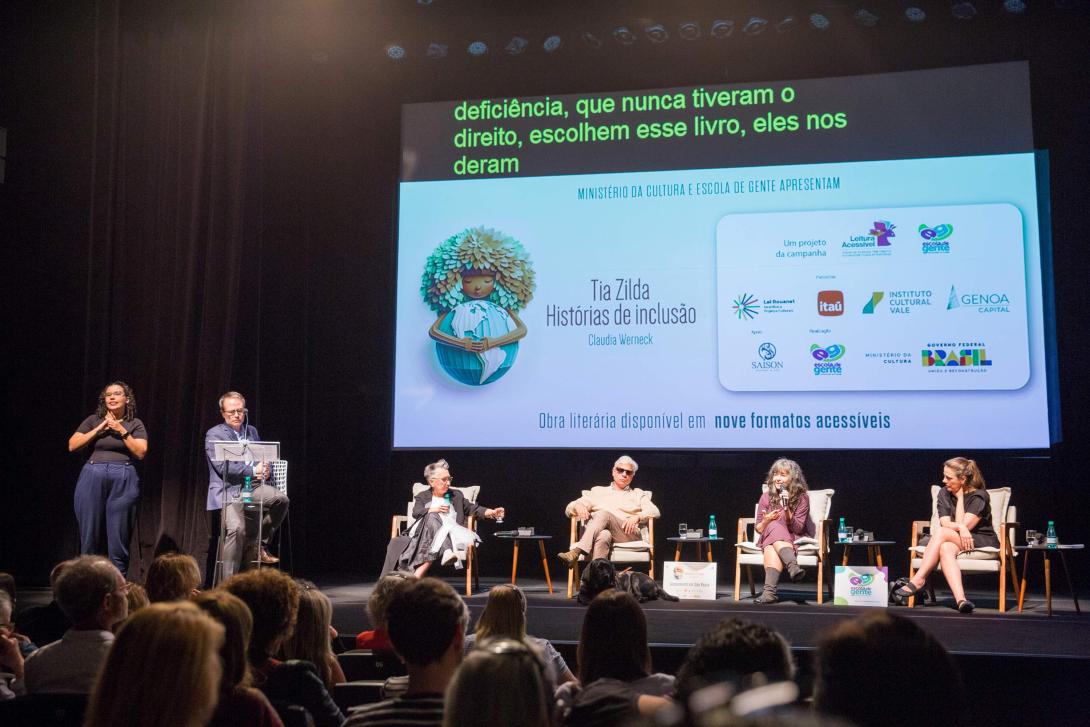
During the launch events in 2024, all accessible formats were presented
simultaneously through fully accessible digital resources, allowing participants to
experience the same literary work at exactly the same moment using their preferred
format. This unprecedented approach transformed accessibility itself into part of the
public cultural experience.
Persons with disabilities participated in the development, testing and validation of all
accessibility features, ensuring their effectiveness and usability. The book is
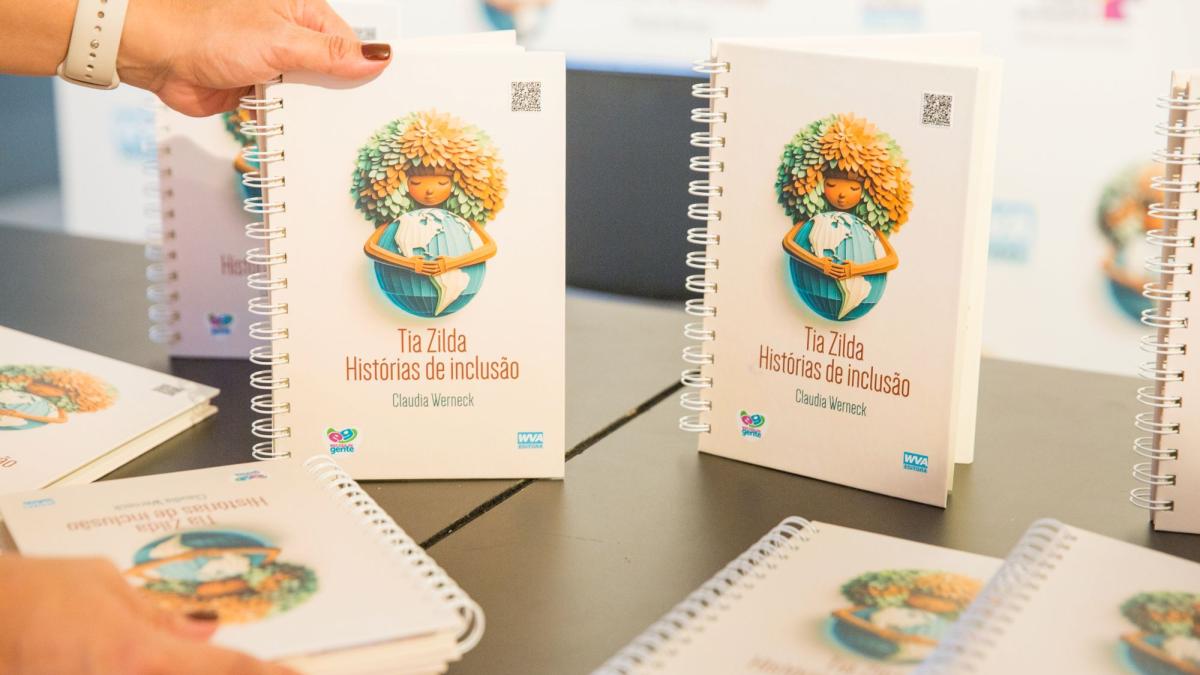
available in nine accessible formats: a printed Wire-0 edition that facilitate handling
by readers; audiobook; audiobook with audio description; accessible PDF, TXT and
DOC files with image descriptions; video in Brazilian Sign Language (Libras) with
captions; video in Easy Language; and an accessible e-book with descriptions of
images and graphics. Digital master files for Braille printing are also provided free of
charge.
A tactile QR Code in the printed edition provides direct access to all digital formats
through Escola de Gente's digital platforms, including VEM CA, the EC's Zero
Project Award-winning accessible platform. Tia Zilda demonstrates how
accessibility can be embedded into publishing from the outset, creating a single
cultural experience for everyone.
The main impact of this project is that persons who are blind, deaf, deafblind, have
intellectual disabilities, with low literacy and other possible barriers to acquiring information
when it is presented without accessibility measures gained access to the same literary work
as everyone else through formats designed for their needs. This contributes to expanding
the still limited selection of truly inclusive and accessible literature in Brazil.
But the impact goes further than that: the methodology created for Tia Zilda is highly
replicable, which has the potential to multiply the impact of this project by a lot. In fact, the
project’s methodology has already influenced subsequent accessible publishing initiatives
developed by Escola de Gente, including a new book - “Tia Lila. Stories about inclusion” -
planned in 12 accessible formats.
Furthermore, the project exposed 30 organizations all over Brazil, and thousands of people
within them, to accessible reading in practice, demonstrating that accessible publishing,
even at scale, is possible.
Tia Zilda - Stories of Inclusion improves the current situation in several ways. Although
accessible books exist in Brazil, they remain scarce and are often offered in a limited number
of formats, meaning that many persons with disabilities or communication barriers continue
to face difficulties accessing literature and information. The project addresses this challenge
by making the same literary work - the Tia Zilda book - available simultaneously in nine
accessible formats - listed above in the Project Summary section -, allowing readers with
different disabilities, literacy levels and communication preferences to access the same
content according to their needs.
Not only that, but the author, Claudia Werneck, takes a step that few other authors do: all of
her books are available online free of charge in Escola de Gente’s digital channels, and Tia
Zilda is no exception, having been made available online from the very day it was launched.
This is perhaps one of the biggest innovations with every single project made by Escola de
Gente: it considers the lack of cost to be an accessibility measure, as according to the UN,
over 80% of persons with disabilities live in poverty in countries such as Brazil.
The project also improves the traditional publishing process. Rather than treating
accessibility as an adaptation introduced after publication, accessibility was incorporated
from the outset and became a central element of the book’s design and production. This
approach is fully aligned with Design for All principles and demonstrates how inclusive
publishing can be planned from the beginning rather than implemented as a corrective
measure.
Another important improvement is the participation of persons with disabilities in the
development and validation of the accessibility resources, as often, even when
organizations do apply accessibility to their products, it’s not tested - or at least, not as
thoroughly as Tia Zilda’s accessibility measures were. Their involvement helped ensure that
the accessible formats effectively met user requirements and preferences, strengthening
both the quality and usability of the final product.