Ville de Luxembourg
Summary
Description
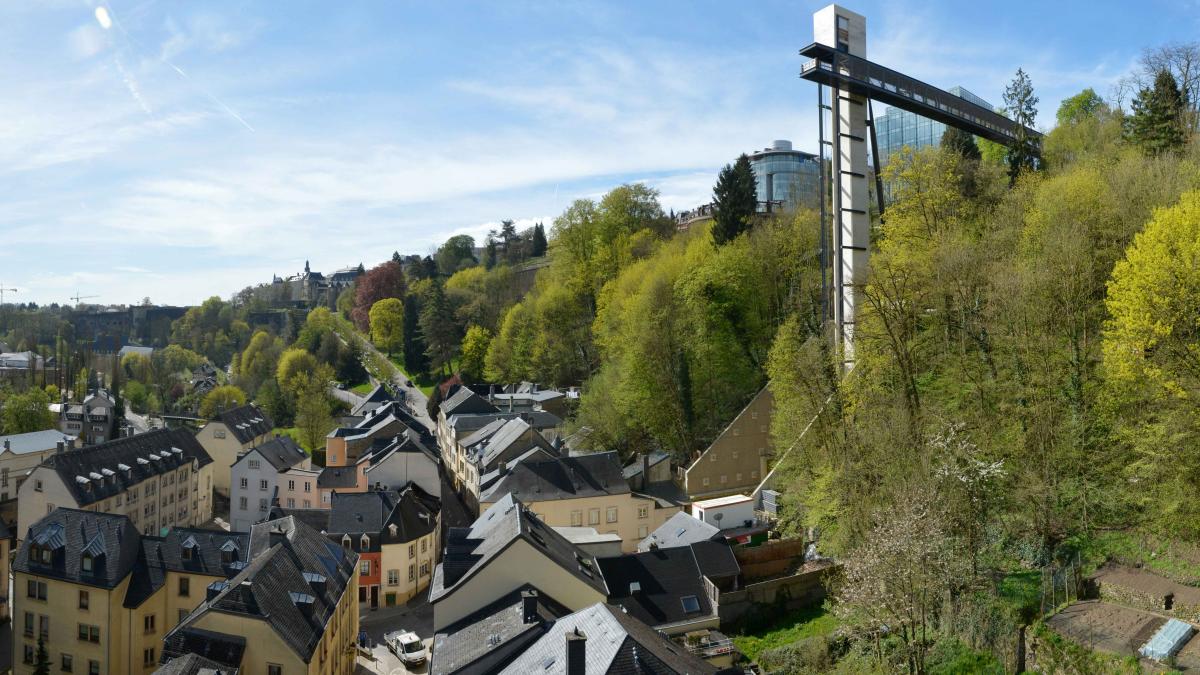
Luxembourg City's public lifts, in particular the Pfaffenthal panoramic lift, the Grund lift and the panoramic lift at the Luxembourg City History Museum, play a key role in helping people understand and explore the city's heritage. These lifts are not only transport infrastructures, but also tools for experiencing the city's history, architecture and evolution.
The city of Luxembourg is characterised by the stark differences in elevation between the upper town and the river valleys. The Pfaffenthal panoramic lift connects the Ville Haute with the Pfaffenthal district, offering panoramic views of the Alzette river valley and the surrounding historic areas. This visual experience helps visitors understand how the city developed around its natural topography and fortifications, many of which are part of UNESCO's world heritage.
The Grund lift connects the upper town with the Grund district, one of the oldest parts of Luxembourg City. By facilitating access to this lower historic district, the lift makes it easier for visitors to explore its medieval streets, river slopes and traditional urban fabric. The journey itself, including the pedestrian tunnel with artistic elements, contributes to a cultural and interpretative experience rather than a purely functional one.
The panoramic lift inside the Luxembourg City History Museum has a more explicitly interpretative role. As visitors move vertically through the museum, the glass lift reveals rock foundations, architectural layers, and views of the surrounding historic landscape. This vertical movement symbolically mirrors the passage through time, helping visitors understand the geological and historical layers on which the city was built.
Together, these lifts enhance accessibility, provide unique viewpoints, and connect different historic quarters that in the past were difficult to reach. By combining modern engineering with heritage settings, they transform everyday movement into a meaningful way of discovering Luxembourg City’s history, geography, and urban identity.
The public elevators of Luxembourg City (Pfaffenthal, Grund and the panoramic lift at the Luxembourg City History Museum) are strongly aligned with Design for All (DfA) principles, as they are conceived to be usable, accessible and meaningful for the widest possible range of users, regardless of age, physical ability or familiarity with the city.
1. Universal physical accessibility
All three elevators remove major physical barriers created by Luxembourg City’s steep topography. They allow everyone, including people with reduced mobility, wheelchair users, parents with strollers, elderly visitors, and cyclists to move easily between the upper city and the lower quarters. Wide cabins, level access, smooth transitions, and integration into public pedestrian routes support equitable access to historic areas that would otherwise require long stairways or steep paths.
2. Equal access to heritage and public space
Design for All emphasizes participation in cultural life. These elevators ensure that historic districts such as Pfaffenthal and Grund, as well as museum exhibitions, are accessible to everyone. By doing so, they prevent heritage from becoming exclusive to those who are physically fit and instead promote inclusive tourism and everyday use by residents.
3. Intuitive and legible design
The elevators are easy to find, clearly signposted, and integrated into the urban fabric. Their transparent and panoramic design helps users orient themselves spatially, understand where they are going, and feel safe. Visual openness reduces anxiety and improves usability for first-time visitors and people with cognitive or sensory difficulties.
4. Comfort, safety and dignity
Design for All goes beyond minimum accessibility standards. These elevators offer protection from weather, safe movement across large height differences, and comfortable travel without physical strain. The experience is dignified and pleasant, not stigmatizing or hidden, as accessibility features are integrated into mainstream public infrastructure.
5. Multi-sensory and experiential value
The panoramic nature of the lifts benefits not only people with mobility impairments but all users. Views of the city, rock formations, and historic quarters create an inclusive cultural experience that engages sight, movement, and spatial awareness. In the museum lift, the vertical journey itself becomes an interpretive tool accessible to all.
6. Social inclusion and everyday usability
By functioning as part of the public transport and pedestrian network, these elevators are used daily by locals and visitors alike. This normalizes accessibility and reinforces the Design for All principle that inclusive design should serve everyone, not a specific group.
In summary, the elevators align with Design for All by ensuring physical access, cultural participation, intuitive use, comfort, and dignity, while seamlessly integrating accessibility into the identity and heritage of Luxembourg City.